First Snow

People are loud. We make things with speakers so we can “turn up” the volume. We use large banging and crunching machines to “clear the land” and “make way for the new” by demolishing the old. We have sayings like “the squeaky wheel gets the grease,” which speak to the power and influence we associate with being the loudest.

Our cities have a constant hum underneath the isolated collection of noise makers: horns, sirens, bells, whistles, crashes, and slammings and bangings of all kinds. Our buildings rise tall and give echo to all sounds, blending them into tsunamis of sound washing through our streets, burying our quiet, and leaving no stillness undisturbed. 

Our homes fill with a competing cacophony each morning. The alarm jolts us from our sleep. The coffee machine beeps to call us to get moving. Our computers and phones beep and flash messages demanding immediate responses. Our televisions click on to tell us of all the bad that has happened, is happening, and could happen. Our cars and trucks roar to life in our driveways. People are loud, and the things we make are even louder.

The first snowfall is a welcome reminder of the power of quiet. Snow never makes a sound. Flakes fall silently, fluttering their way to the ground unannounced and without ceremony. Snow lands softly and quietly deepens. It blankets the ground, pulling a hush over the world. Even the visual blanketing of white somehow quiets the earth. The air is crisp and clear. Like ice freezing the ever shifting waters of a pond to reflect the still color of a blue winter sky, falling snow pulls noise from the air and buries it ever-deeper with each hour – leaving space for the still sound of nothing.

The first snow invites us all to slow down, to listen carefully, and to imagine a world so quiet and filled with peace that you could hear a snowflake fall.

Peace,

Chris
Different Path: Right Direction

This morning I stepped down from the road at my normal spot to make my way along the worn trail that winds around the inlet. The water was quiet-morning-glass. The sky was deep December gray. I could hear the breakers from beyond the outer beach spit. Perfect walking conditions but for the tide – it had flooded over my path.

What to do? Turn back? Slosh through cold ankle deep water? Find another path to go the same way?

Looking to my right, I saw for the first time – a path, less worn but winding in the same direction. 

At first the new way was easy. Slightly bent march grass showed the way clear enough and provided a soft landing for each step. The going was actually easier. Then the path stopped – blocked by a low lying tree that stretched beyond the high tide line. Again the choices were presented: turn back, slosh into the cold water, or find a new way forward. I moved into the web of leafless branches. My jacket caught on a bramble. A broken branch jabbed into my leg. I bent and reached through the limbs.

Fully committed, I walked on. As I navigated more barrier trees, climbed over piled rocks, and pulled apart tangled briars, I found myself paying attention to everything. My wonderings about a past I could not change and worryings about a future I could not control gave way to the simple pleasure of the immediate: left foot, right foot, left foot again. 

When I reached the bottom of the steps I always climbed to return to the road that leads back to my home, I straightened my hat pulled crooked by the briars, rubbed at the spot where the branch had dug into my thigh, and straightened my back from being bent and stretched so many times over.

I had arrived where I had imagined my walk would take me, but the tide had invited me to choose a different way. At first a rebuff, then a frustration, the new path had given me cause to pay attention to my walking and step away from things if just for a while. To breathe, to forget, to not look too far ahead, and most of all to be grateful.

Peace,
Chris

Our Long Walk: Christmas Day 2021

Our family long walk takes us nowhere. We always end up right where we began: at home.

It is what happens along the way that matters. We never make a plan. Sometimes we talk things through. Sometimes we tell stories. Sometimes nobody says a word.

The way is always the same: up our dirt road, along the paved streets, over the winding marsh path, up the wooden steps, back onto the paved road, and down our dirt road to home. What we encounter is different each time. That perfect stick for our dog Stella. A soaring hawk. The nature-striped, Cape Cod horizon of marsh grass / sandy dune /white-capped ocean/ and cloudless blue sky. An abandoned horseshoe crab shell. And yesterday – two white swans.

My favorite part is always the silence that wraps around us as we walk together, each lost in our own thoughts, mirroring the water’s edge, snuggled by the same blanket of empty time and open space.

This morning – Christmas morning – my son Patrick gifted me a handmade card drawn in black ink. The picture he sketched was of our long walk. Comforting to know he feels the same way about the times we have walked the path together. Today on our walk I am going to hold my wife’s hand and slow us down a bit so we can watch our two boys make their way ahead of us. Watching your children find their way in the world while circling back home is really as good as it ever gets.

Peace,

Chris

Rest is Serious Work

What if we ran our lives on rest? Physically, we strengthen our bodies when our muscles are fully recovered. Intellectually, we think through complex problems when our minds are quieted. Emotionally, we navigate stressful situations when we are still enough for reflection.

Our habit of working “harder and smarter” is failing us. We need a reset. We need habits strong enough to withstand the pressures of the twenty-four seven work cycle technology has delivered. We are pivoting our relationship with the planet from user to steward. A simultaneous pivot from racers to resters seems plausible.

Imagine calendars organized by eight hours of rest instead of eighth hours of work. Exercise programs would promote the habit of rest and recovery. Educational programs would teach the habit of creativity. Emotional support systems would nurture the habit of stillness. Imagine the habit of work turned upside down: our “day” beginning at bedtime. Instead of being woken by the  beeping sound of the alarm, what if we began our “day” by falling asleep to the sound of falling rain? 

Applying our work ethic to rest should enable us to become stronger, smarter, and healthier. Today we take pride in the pitch that  “America runs on Dunkins.” But nobody ever won a competitive race by dehydrating themselves. Why are we trying to advance as a civilization by compromising our physical health, our creative capacity, and our well-being? 

What we really need is permission to rest so that our work can reach a new level. Improved physical health, creative solutions to enduring problems, and a new social order of peace and well-being seems worth pursuing. I would like to make the argument that we are not able to produce the quality of work necessary to advance because we have not been working hard enough at resting. 

Peace,

Chris

Do the Math

The assignment is simple: do the math. 

First, make a list of the things you need to do each day in order to “be” well and “do” well. “Being” well means sleeping, eating, socializing, attending to hygiene, exercising, and finding time to do nothing. “Doing” well means fully engaging in your work. 

Second, write a period of time next to each task: eight hours for sleeping, one hour for eating, etc.

Third, do the math: add up the time allotted for what you need to do and subtract that number from the number of hours in a single day: twenty-four.

The math nearly always reveals a significant problem: there is not enough time in your day to do the things you need to “be” well and “do” well. The life we want to live – believe we need to live – is not possible.

Enter – stress, anxiety, and frustration. All the forces that impair our living and send us into a negative spiral of falling behind by trying to do too much. Whenever I teach this lesson, I am struck by the positive reaction that comes from two things: one, the collective acknowledgement that we are not the only ones losing in our race against time; two, the calm that fills the room as everyone goes about the final step of the assignment – adjusting the times until the total is twenty-four or less.

There is something about a feasible plan that loves improvisation. Planning a day scripted to the minute is the assignment, but it is not the goal. The goal is to befriend time by seeing it as a tool for being present. A schedule gives me permission to sleep deeply, to taste my food, to enjoy my friends and family, to feel the strength from exercising my body, to find interest in my work, and to experience the relief of the quiet space afforded by doing nothing.

Jazz is created by arranging chords, melodies and rhythms into units called songs that are played in time. A timed structure like the twelve-bar-blues gives space for the free expression through improvisation. Likewise, a schedule that fits within a day invites each of us to live deeply, riffing our own way forward.

Time does not want us to race. Time is not measuring our progress. Time is reminding us when to begin and providing a limit so we can dive deep enough to experience value. Time is offering to help us be successful. 

I wish there were more than twenty-four hours in a day. But – I think – that wish for more is also time letting me know that I am on the right path, which means it is okay to slow down. 

Peace,

Chris

Just Be Nice

September is my favorite month. The weather cools and the water is still warm. For Cape Codders, September is the month we get our sandbar back.

September is also the month school begins. This week my high school hosted new students for an orientation day. We wanted to make sure they all felt comfortable starting school – especially after a year when so many had been remote.

A group of upperclass students planned the event. They worked on every detail down to the minute. They grouped students by ice cream flavors, created maps of the school, and copied class schedules for each student. They spent hours designing for a welcoming first encounter. The plan was perfect.

Then nature happened. The morning of the event we were hit by a flash flood and everything had to be reworked for a one and a half hour delay. Messages went out, bus routes were updated, everything was reshuffled.

As the buses pulled away from school at the end of the reworked orientation, I sat down on one of the wooden benches, thought about the planning, and asked myself: Why had it gone so well?

I remembered the smiles on the faces of the kids talking with each other in the courtyard and the sound of their laughter at lunch. I heard the voices of the older students running the guided tours: answering questions, pointing out where things are, explaining how things like lunch work, and describing how the buildings each have a different blue letter on them.

Then I understood. The new students had come because they were nervous. The schedules, the maps, and the guided tour were not why they had come. What they really needed, and what they took home with them, was something much more powerful: the feeling that everyone had cared.

The plan had worked because the kids had been nice to each other. Space for kindness – that was the answer to my question.

Peace,
Chris

Listening to Time

Listening to Time

I love the clean organization of a calendar: the seasonal picture, the bold title of the month, the consistency of the days of the week organizing the columns, and the predictable sequence of numbers in the upper right corner of each square. The structure is calming. But what I love most is the inviting emptiness of each square of time posing the question: How will you spend your day?

Time makes it possible for us to live individually and in community. Time marks when things begin and end. Time lets us enjoy shared experiences. Time offers a structure for balancing work, family and health.

So why is it that we often try to cheat time? Why do we use time to turn our living into racing? Why do we hear time telling us to hurry up? Why do we push against time by trying to fit too much into every empty box on our calendars?

Yesterday I went for my end-of-the-week run. My calendar told me I had forty minutes blocked off. Running is my self-care time. I love everything about running: the quiet that lets you hear your breathing, the burn of muscle that lets you feel your legs, and the mental challenge to keep going that empties your mind. Having a box of time set aside for running gives me permission to let everything go and just be.

I had one of those runs where you feel good enough to push hard up the hills, increase your turnover down the hills, and sustain your pace across the flats. At the halfway mark I looked down at my watch expecting to see a digital 20 and saw the number 17. I smiled – I was crushing it on a hot day. I was ahead of my pace – winning against myself. I began to make my turn, then it occurred to me that I had read my watch wrong. Time was not telling me I was winning. Time was telling me I could keep going. My effort had somehow given me extra time for running. I straightened out of my turn and ran the next hill – embracing the invitation to do nothing but keep running.

As the season changes and we prepare to flip over the calendar, I am going to try to listen more carefully to what time is really telling me. I am going to ignore my own racing voice, turn away from external voices calling for more of everything, and try to settle in and take the advice of time to simply enjoy whatever it is I have scheduled on my calendar.

Peace,

Chris

Proud Moment

Everything used to fit neatly in the back of the car. Now Mason’s big red goalie pads block half the rearview mirror, the sticks nearly reach into the front seat, and my own jacket has to be balled up and stuffed in a corner. Everything but our car is getting bigger.

Last night we packed the car to drive off to a hockey tryout my boys had been anticipating for months. A summer of going to camp with on and off ice training, shooting sessions in our driveway, and distance runs in the humidity had all been directed at “making the team.”

At least that is the story we typically tell. You know, the story about setting clear goals, working hard, making sacrifices, and finding success. That story is true. They did set a goal, work hard, make sacrifices, and make the team. 

But the memorable moment – the one freeze framed in my mind is not any of that. Instead, it is my son Patrick’s voice as we pulled out of the driveway: 

“Look at Stella.” 

Stella is our chocolate lab and Patrick was directing us to see her standing in the frame of our open front door, her nose pressed up against the screen, her big cow eyes watching as we pulled away, and her looking like she was worried we might never return home.

Stella’s life seems so immediate – so extreme. Her simple presence – her way of connecting with each of us draws us together around her. She is the baby. Her nose pressing against the screen door seems like an odd thing to remember when so much was at stake last night.

But I think what I am really remembering is Patrick’s voice, his looking out of the car window, and his noticing Stella at a time when he could have been too busy thinking about himself to notice her. Somehow that was my proudest moment of the night.

Peace,

Chris

One Simple Message

“Hey Chris.” 

That was how the email began from Keith – a student I had taught over thirty years ago. I had been a new twenty-five year old high school English teacher just trying to stay a few pages ahead of the class. Keith had been a talented  eleventh grade musician trying to navigate the world immediately in front of him. In other words, we were both lost together.

We had been luckier than most – we were at an amazing school founded by an educator who believed learning was all about developing strong relationships. It was a place where students and teachers called each other by their first names, where the kids played music out of the back of their cars during lunch, and where shoes were very optional.

I responded to the email at once – of course. “Wonderful to hear from you” I opened. A few exchanges and we had set a date to meet the next morning at Nauset Beach. Driving home, the world made sense. The year of COVID had left me exhausted and worrying if we could ever recapture the wonder that had drawn me to education. That email let me know the magic was very much alive. 

The next morning my family and I made our way across the sand to our regular spot beyond the crowd. We set up chairs and our umbrella, took our first plunge, and settled in for a morning of watching the tide rise.

To be honest, I was a bit nervous. How would I recognize him? I remembered long hair – what if that had changed. I knew I certainly did not look twenty-five anymore. What would we talk about? Would we find ourselves standing awkwardly twisting our feet ankle deep into the sand with no escape from what had seemed like a good idea at the time of the emailing?  

Fumbling through my bag for a book, I heard a voice. “Are you the Ellsasser’s? I looked up. I recognized the face immediately. I stood up. We hugged and started talking like no time had passed. Introductions all around. Stories of English class, books read, conversations had. Abridged version of our lived histories over the last three decades. Laughter, smiles, and the unspoken appreciation for a school that made possible a relationship with the strength to survive across time and geography. Over thirty years and three thousand miles we had somehow found ourselves on Nauset Beach. At the end of his graduation ceremony at that school in sunny southern California, I had told him he had to visit my hometown beach of Nauset when he was off studying music in Boston. Who could have imagined then how we would come together this August morning?

This past year has been so difficult for so many. For teachers and their students the hardest thing has been not being able to share the common space of the classroom. I am so excited that we will be returning to classrooms together. In my current role as Principal, my greatest hope for my teachers and their students is that our school makes it possible for them to connect and stay connected no matter what happens, no matter where they travel, and not matter how much time passes.

Peace,

Chris

Marshmallow Night

Saturday is marshmallow night at our house. I am in charge of the fire. The logs are halved and then quartered to provide just the right level of burn. Once cut, the fuel is arranged into a metal bucket and set next to my chair – we each have our own chair in the circle. 

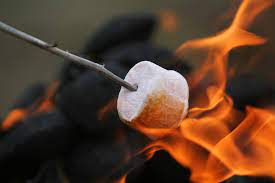
The marshmallows are tumbled into their bowl. Our long pointed sticks are assembled against the deck railing. I tune in the seventies channel and set the volume just right. The setup is always the same: crumpled newspaper establishes the base below thin crisscrossed kindling topped by two logs. The sun disappears behind the house and the sky begins it’s  turn from blue to black. I drop a single match into the pit, and the storytelling begins.

There is something about gathering around a fire in the evening that opens the conversation. The contrast of the wet ocean air and the dry fire heat? The bright light of the flame against the star-pricked sky? The breeze that sounds the chimes? The crackle of popping sap? The fire calls for circling up, talking, and listening through the flames about yesterdays and tomorrows. Storytelling grounds us to the evening – the moment – the present.

It is the stories we choose to share that reveal who we hope we are becoming. Our stories hold front and center what we value. The details we recall invite listeners to consider the world as we filter it. The characteristics we highlight hint at how we hope we respond to what comes our way – welcomed or not. Our stories take everyone to the “back in the day,” the “do you remember when”, the “I have a version of that”, and the “can you believe we were ever like that” recollections that name the experiences and the people we shaped ourselves against.

Our renderings are unique reminders that no two of us are alike, and that even the same experience at the same moment is as different for each of us as the circled print left by a single finger. We speak the same language and yet – somehow – the stories we tell are differently recalled – uniquely filtered.

In the end – it seems we come together to tell our stories to both reveal our uniqueness and confirm our common ground. We share the need to stand in solidarity. And -at the same time we want very much to be essential. 

When the flames lower into the pit and pull into burning red coals, we turn away from our stories, reach for our sticks, and join in the careful turning of the marshmallows. Freshly confirmed by the unique roles captured in our stories, and re-tethered to a world larger than our personal space – we feel at home, safe, calm. Our living settles into simple: a single rotating stick in the middle of a burning pile of coals under a night sky on a planet spinning in a galaxy lost in the universe. We focus – together.

Like so many things, fire can be good and bad. So often our approach determines the impact. Our relationship to a thing frames our experience – setting the stage for how we interact. A fire designed for storytelling is built to keep the flames tight, the smoke rising, and the heat low enough for us to lean into each other. Too much flame and we lean away from each other, too much smoke and we cannot hear through our watering eyes. A fire built to settle into hot coals for roasting marshmallows gets it just right: the wonder of the first flames, the heat of the middle fire, the warm glow of the coals in the third act. 

Marshmallows – the perfect excuse on a summer night to tell a familiar story or two in an unfamiliar way that brings us close enough to touch while leaving enough space to hear each voice clearly.

Peace,
Chris