A Gift

It was the light that we came to see. Sitting in the cab of my truck, warm and looking through the spotted windshield, we watched the sky change. I cannot describe the colors we saw, there are no words for how the sun pulls back from the sea.

We came for the light, but the quiet was what we needed.

Parked at the end of the road, near the steps leading to the inlet, we watched the birds soar, dive, and settle onto water chopped by winds from the outer beach. There were fewer and fewer as the light drew back. Then, in that instant, when I could feel the sun had set, we were alone.

I could feel my heart beating. I could hear them watching. They had grown too big too fast. I wanted to go back, to see them in their car seats, to watch their mother playing hide and seek, to fill their spoons and play the game. But like the sun, I knew that time had passed.

So, I sat with them, waiting to leave and hoping we never would.

I am grateful for the light that drew us to the end of that road, but it is the quiet we shared that I will always remember.

Castles made of Sand

More than Work

The secret is to get the water just right. Too little, and you get a sand pile. Too much, and you get a sand pie. Just enough, and you get smooth sides, tapering to a clean edge with a firm top for anchoring a seaweed flag to your sandcastle.

You also have to hit the tide right. Start at high tide, and you walk for water more than you build. Start at low tide, and you get flooded before finishing. If your first scoop holds its shape, you are in the middle of the receding tide, which means half the walking and twice the time for building.

You can purchase all sorts of tools. The prefab molds come in every shape and color: blue towers, red walls, purple arches, green turrets, and orange staircases. You can buy a whole kit, complete with netted carrying bag. I prefer a solid shovel and a medium bucket with a strong handle. The fewer tools, the more you work the sand with your hands.

We always included a moat with a bridge. We gathered smooth, flat rocks to protect the bridge from erosion and staffed a water brigade to keep the enemy at bay. Four corner towers and thick walls crowned with carved battlements are standard. Tiered towers and a drawbridge are the work of veterans.

The ideal crew is three: one for gathering water, one for bucket work, and one for shaping. As we got older, we learned the drip method, incorporated feathers, used shells for carving and even paved cobbled roads. We built raised foundations to make our work tide resistant. As we advanced from the single-bucket flip to elaborate castles filled with hermit crabs, one thing never changed: the ocean always reclaimed her sand.

Sand can be shaped into anything, but it cannot be changed. A valuable lesson for us as we imagined our futures: magician, athlete, musician, and then watched time erode those to make room for different work: carpenter, doctor, teacher. Through each discarded profession, we had the opportunity to see ourselves raw and to consider who we were becoming more than the work we would do.

Sandcastles can be extraordinary. It is incredible what our imagination and opposable thumbs can create. But there is nothing more beautiful than a beach undisturbed by human hands. The fresh look at sunrise when a full moon has pulled the tide high enough to erase every footstep. The stillness of a low tide at sunset when the ocean reveals rippled flats of inverted waves.

The same is true of people. Professions are impressive, the work we produce can be extraordinary. But something about the interplay of grandchildren and their grandparents living outside the confines of professional life speaks to our most extraordinary capacity: love. The one innocent of future concerns and the other removed from professional ambitions, there is a quiet they inhabit where we can see ourselves at our best: caring without distraction or reservation.

When we accept loss as part of a cycle beyond our comprehension, as the reason to continue to share ourselves and be present with the ones we love, then time stops counting down. Our living becomes like the tides: low embraced by high, returned to low, and welcomed again by high, replacing the compulsion to finish with the patience to observe. Revealing that who we are with the ones we love matters most.

Constant change redirects us to our core and encourages hope. Accepting that nothing lasts, focusing on who we are, and embracing the brevity of moments, we can immerse ourselves in our living – free from worry about things we cannot change.

Peace,

Chris

Mini Golf

Windmill Monsters and the Gift of Make-Believe

I pulled off the road on a Wednesday afternoon and treated myself to a round of miniature golf. The place had just opened for the season. The sky was overcast, with rain predicted. I paid, chose a ball, selected a club, folded a scorecard into my back pocket, and tucked a pencil behind my ear. I had the place to myself.

One hole led to the next without incident. But as I approached the sixth tee with the windmill and its sail-rigged arms, my imagination woke. A monstrous giant loomed in the distance, its long arms circling, its single-paned eye staring down the narrow-carpeted fairway. Prepared to engage the beast, my club in hand and ball at the ready, I stood over the tee, shifting my weight back and forth, studying the wielding arms. I counted off until I had the timing of their rotation. Ready to enjoy the spoils and etch my good fortune onto the scorecard, I exhaled, let the club drop, and watched my ball race into peril.

“Slay the monster!” I yelled.

My club waved wildly. “Evade the wheeling arms.”

Eying the tiny open door, I called out, “Reach the tunnel. Escape into the darkness.”

The ball slipped between the monster’s grasp, and my arms rose in celebration, “Fill the empty cup!”

I rushed to the windmill, ducking to avoid being struck by the same arms that conspired to steal my ball. Safely beyond the spinning arms, I witnessed the reemergence, the skip over the cup, the knock off the back wall, the roll to where it teetered on the edge, and the drop. A hole-in-one: monster vanquished.

As a kid vacationing in the summer, I remember returning from our annual miniature golf outing to my grandparents’ house and their Cape Cod lawn: pine needles, sand, and tufts of dry grass. There we would build our own miniature golf course. The tees were soda bottle caps turned upside down. The greens were paths of sand swept clean of needles. The windmill was an overturned chair with a beach towel blowing in the wind. The tunnels were discarded gutters found behind the garage. The final hole was a bucket buried and covered with an old green doormat pulled from the trash. We used my grandmother’s gardening shears to cut a hole in the middle. Evidence of our commitment to the cause.

On overcast days when our beach towels hung heavy on the clothesline, we would escape to the backyard with my grandparents’ old putters and imagine ourselves battling the mini-golf holes we had encountered over the years. The straight shot where you had to steady your nerves. The long fairway where speed was essential. The banked turn needing a finer touch. The loop de loop, where you struck the ball without reservation. The steep hill threatening a shameful rollback to the tee. The tunnels where accuracy meant everything. The wishing wells with their ramps demanding the perfect blend of speed and direction. The lighthouses with their blinking lamps. And the final holes where the ball always vanished.

Miniature golf courses have changed like everything else. There are courses with waterfalls, courses with lagoons, and even courses with snow-capped mountains. But behind the façade, the game is still the same. The balls are still brightly colored – you choose your representation. Nobody pays for special coaching – luck and skill determine your game. There is no market for innovative clubs providing an edge – everyone gets the same bootstraps. The score is still recorded with eraser-less pencils – no adjusting the record. When you sink that last ball, it vanishes, no matter who you know.

I recommend a game of miniature golf when it becomes difficult to catch your breath, when you find yourself overwhelmed, or when you just want to step away for a moment. You don’t have to be on vacation. It doesn’t need to be a hot summer day. You could even be alone on a random Wednesday afternoon when the course has just opened for the season.

Stepping back into childhood spaces awakens something. The familiar sounds, the forgotten images, and even the smell of the places we knew as children remind us of a time when make-believe was everything: when our imagination could turn a stick into a wand, a sheet into a ghost, and a bicycle into a horse.

Not everything needs to be planned. Not everything always adds up. Most of what we need to do can wait. Stealing half an hour for yourself is not a crime. And there is nothing like battling a four-armed, one-eyed monster and sinking a hole-in-one to remind you that anything is possible.

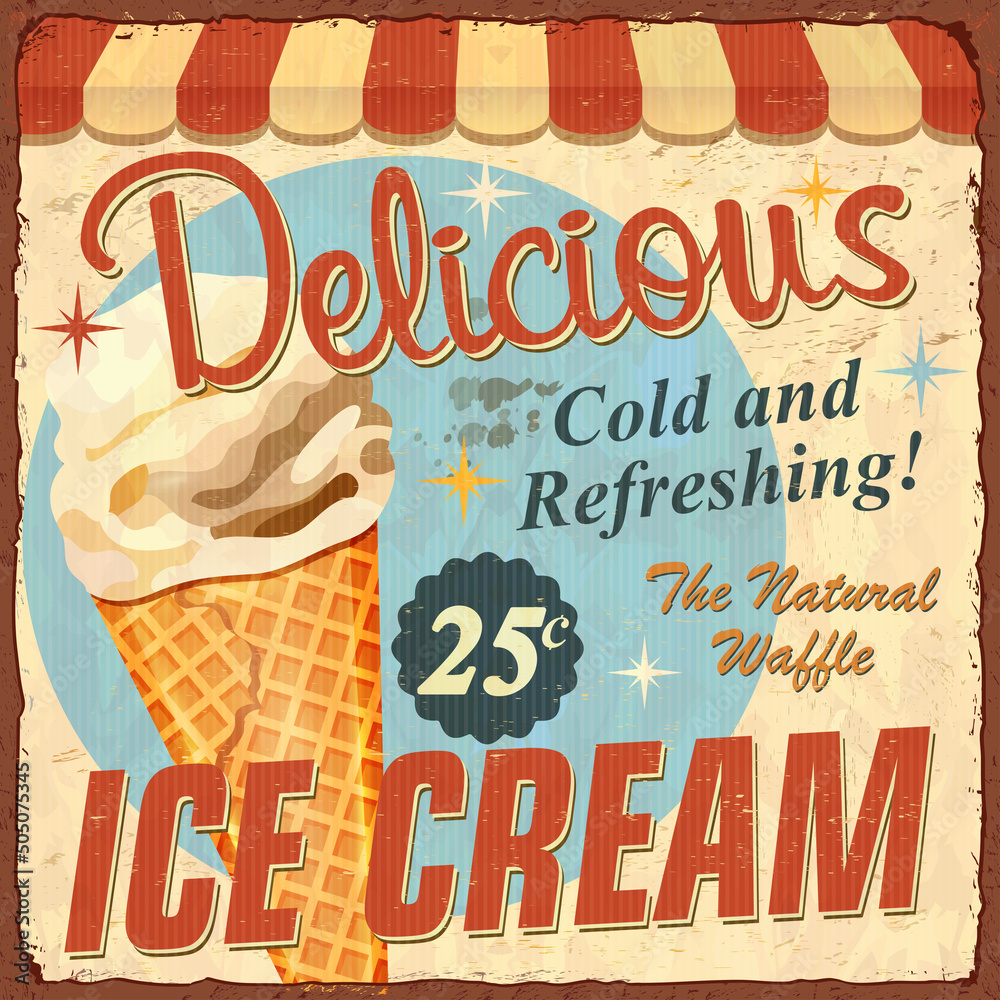
Ice Cream: Flying Napkins and the Ones We Love

I order two scoops of mint chocolate chip in a sugar cone. I like tiny, shaved chips, not chunky ones. The cone is my favorite part. I take bites to avoid dripping. The trick is to keep the space between the ice cream and the wrapped napkin licked clean. Once the scoops are flat to the cone, you can relax, then savor the best part: the last cream-filled bite of cone.

My first ice cream memory is the orange roof of Howard Johnson’s. I remember standing in line with my siblings and grandparents. My brother and I ordered vanilla in a cone. My sister ordered chocolate. We always had stacks of those thin paper napkins that could fly on the slightest breeze. I remember my grandfather’s laugh, crinkled eyes, and full-face smile.

The contrast of thick summer heat and cold scooped ice cream demands attention. You can’t eat at your leisure. Too fast, and you get “the headache.” Too slow, and sticky soup coats your hand. Just the right pace, and each lick tastes like the first. The sugar rush brings smiles bursting with laughter. If you order more than you should and finish it, your head grows heavy, and you nod off on the ride home.

Ice cream with our children added a layer of responsibility: being in public with food that melts the moment you step back from the counter—fortunately, our twins prefer ice cream in a cup with a spoon. The spoons are always too small, and the cups can topple over, but you don’t have to worry about dripping.

We would scout an umbrellaed table, and my wife would save our seats while our twins and I got in line. When they were little enough to hold hands in public, I would place their order, hand them their spoon-crowned cups and grab as many napkins as possible. When they got old enough to see over the counter, I stood behind them and smiled as they placed their orders and reached out to pay with clenched dollar bills.

Back at the table, we would deal the napkins like cards. Eating time was quiet. The cups relieved us from parental drip duty. We would sit together, salty from the ocean and burned from the sun, with nothing to do for the rest of the day.

Now my mom and dad are grandparents. The old Howard Johnson’s has changed hands many times, and the orange roof is painted brown. Soft ice cream has become the thing, toppings are essential, and the cost of a few scoops would buy dinner for the family back in the day. Details aside, the ritual remains. They still haven’t figured out how to make napkins that won’t fly. Umbrellaed tables with easily tipped chairs are still the décor. The list of flavors has grown longer. But the oasis of time spent eating against the dripping clock remains untouched.

Sugar mixed with milk and cream, whipped, and chilled. No nutritional value. An unnecessary culinary invention. Irreplicable at home. A priceless reminder: the time we spend with the ones we love determines our quality of life.

I can’t wait to meet our grandchildren, stand in line holding their hands, place their order, grab a stack of those napkins, and share a quiet moment enjoying ice cream together. I wonder if they will prefer cups or cones.

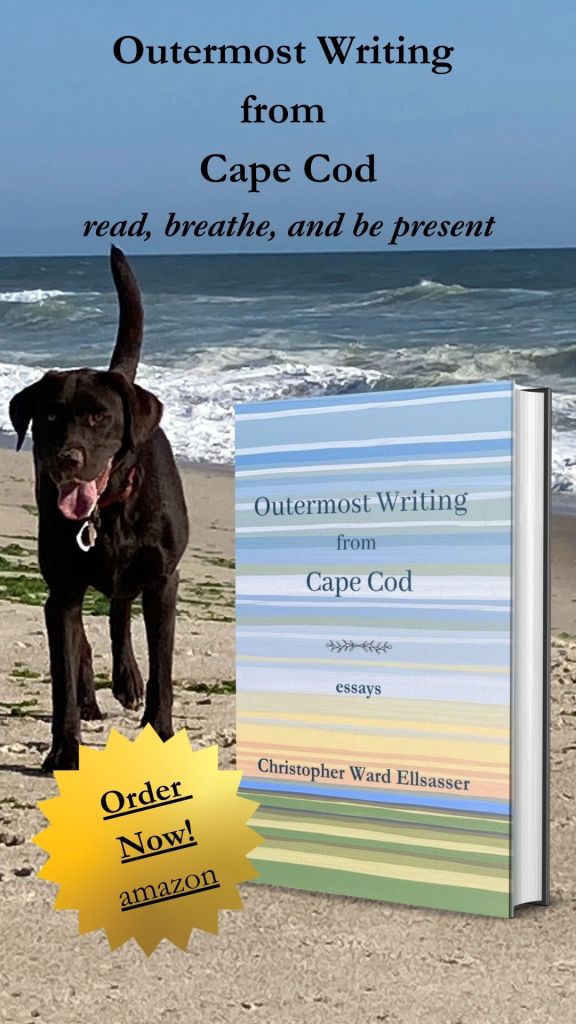
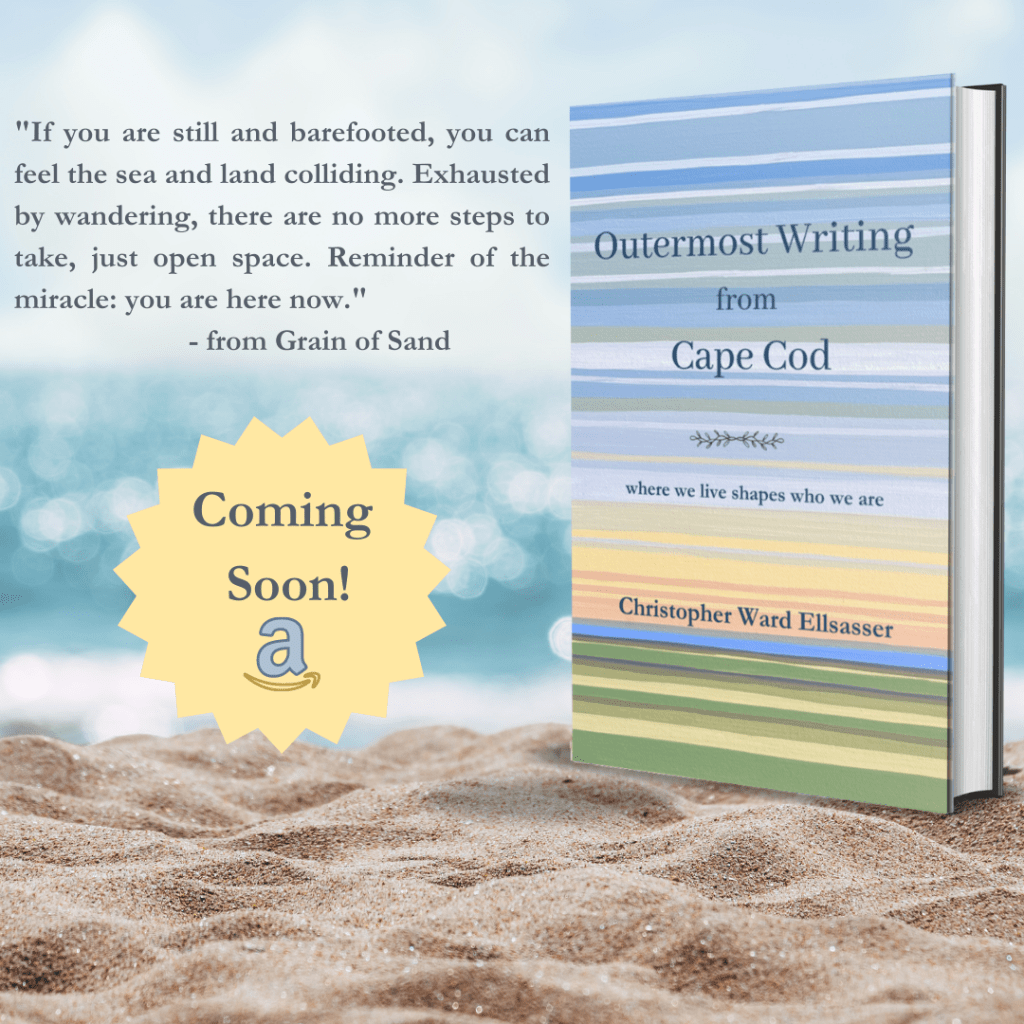
New Book Arriving Soon

Inspired by the natural beauty of Cape Cod, my new book, Outermost Writing from Cape Cod, explores the relationship between where we live and who we are. Available on Amazon soon.

The Dark

it holds us close

I was afraid of the dark when I was nine. I was convinced that if I touched my bedroom floor at night, then the thing living under my bed would snatch me from the world. Each night, I jumped from the threshold to my bed. 

Almost a half a century later, I have come to think of the dark as a trusted friend. Someone I can turn to for understanding when bad things happen.

I am a writer now. Rejection notices are part of the work. If you are not being rejected at least a couple times a week, then you are not working hard enough.  Back when the rejections were delivered by snail mail, I used to pin the paper notes on the wall above my typewriter. I figured each rejection put me one step closer to being discovered.

I have been working on a writing project for a few months. Last week, thanks to technology, the work hit inboxes everywhere. On Sunday, I received an email note of rejection followed by 222 more just like it. It was like a rejection-tsunami. Usually, they arrive one at a time and you manage them like any other bump in the road. Not this time.

I made a cup of tea and retreated to my writing space. I left the light off and the blinds open so I could feel the full dark of the night.  I opened each of the 223 emails and read them to myself with the dark. When I was finished, I did what anyone else would have done, I recalled every regret from my past, and every dashed hope for my future while wallowing in the disappointment of my present. 

I leaned into the rejections, cataloged the regrets, and waved goodbye to the hopes. It was painful. Cocooned by the dark of the room, and under the watchful eye of the night, I let the disappointment sink in deep. The dark did not flinch, it did not judge, it did not offer advice, it simply sat with me and listened. 

I knew that if I could accept the rejections, see each for what it was and was not, then I would be able to move forward. I needed to be honest with myself. I needed to express my fear. I needed to feel sad. I needed to share my doubts. I needed to touch the bottom. I needed to climb back to the surface and try again. I needed the dark to hold me close.

Later that night, I lay awake with the dark. I felt the day melt onto the floor, circle, then vanish into the hole I imagined beneath our bed. Feeling the full disappointment of the rejections freed me to let them go. The dark pulled them deep until there was nothing left to fear.

I fell asleep, grateful for dark’s compassion, and looking forward to stepping into the light of a new day. 

Lucky

she had been working her “A” game since the third grade

she had been working her “A Plan” since the third grade

“What’s that noise?”

“What noise?” She said looking up from her book.

I turned down the radio. “That clanging.”

She tilted her head.

“Now can you hear it?” I asked.


My wife is a lawyer. Jackie is one of those people who always knew what she wanted to be: a criminal defense attorney. She started her “A Plan” in the third grade.

My “A Plan” was to be a professional athlete. But the evidence piled up over the years until even I had to admit it was not happening. My revised “A Plan:” marry the lawyer.

(to continue reading visit https://chrisellsasser.substack.com

I’m late, I’m late, I’m late

do nothing when you’re not doing something

Speed kills an average of thirty people each day. According to the National Safety Council, speeding is the major factor in traffic deaths and injuries. But driving the speed limit is also dangerous if you are the only one. 

Speeding on the road reduces your reaction time, increases your stopping distance, and compromises the effectiveness of road safety structures like guardrails. Speeding in life impairs judgment, increases unintended consequences, and reduces opportunities for support. On the road and in life, the faster we move the more vulnerable we become.

“Hurry Sickness,” yes it has a name, reduces the time for self-care practices, resulting in trouble sleeping, poor appetite, chronic fatigue, headaches, stomach issues, a compromised immune system, and hypertension. Hurrying makes us hostile, anxious, and depressed.

I have read up on the “Slow Movement” calling for everyone to do less, or even more annoying, to add another thing to your list like regular exercise. Doing less is not possible. Doing more is impossible. The other problem with slowing down is that nobody else is going to do it, so you would end up like that guy driving fifty-five miles an hour, resulting in the braking and lane changing wreaking havoc on the highway.  

What do we do? The research is in: speeding in your life is neither healthy nor productive. Lose – lose. Of course we already knew that by the way we feel on Monday morning, but now we have the science to back us. How might we change our pace setter in life from the fastest to the one with the most sustainable pace. The best way to run a race is with even splits. Front runners always fade in the final phase of the race. So we are all chasing the most dramatic loser.

I have been experimenting with something that has calmed the “hurry up” voice in my head. I do nothing when I am not doing something. Of course I am always doing something. The day starts with making breakfast way before the sun comes up, and ends with fixing the coffee for the morning  way after the sun has gone down. The list between those two tasks is ridiculous, and totally necessary. But I have discovered that I spend quite a bit of time waiting.

I looked up waiting and it turns out that we each spend about five years of our lives waiting. Two of those at traffic lights. Unfortunately, based on my very unscientific study of people, it looks like we are filling those five years of downtime with impulse-social-media-surfing. The moment someone stops moving, they reach for their phone. 

I am not an EMT,a fireman, or a police officer, so nobody really needs me right away. If my phone buzzes, it is not an emergency. Even if it was, there is nothing I could do. I am a writer. There is no such thing as a writing emergency. If you have an emergency, call 911, someone who can help will answer.

Here is what I have started doing when I am waiting: Nothing. I just wait, feel the boredom flow over me, and let myself drift into daydreaming. I do not check my phone to see if anyone has called, emailed, or texted, search for breaking news, or swipe through pictures and reels of the perfect life I am not leading. I just wait and smile, knowing I am on a break.

I am not claiming that doing nothing while waiting is going to change the pace of life. But each day you wait for the coffee, you wait for the light to change, you wait for the meeting to begin, you wait for the practice to end, and you wait in line for everything. Waiting is baked into each day, and there is nothing really constructive you can do during that time. 

Maybe if we reclaimed the boredom of waiting as our new form of collective meditation, then we might experience a slowing of our minds each day. It could be infectious. I know when someone reaches for their phone I feel compelled to display my importance by reaching for mine. 

What if we all just stood there staring off into space while we waited to do the next thing on our ever-growing list?

Peace,

Chris